University of Northern Colorado Athletics
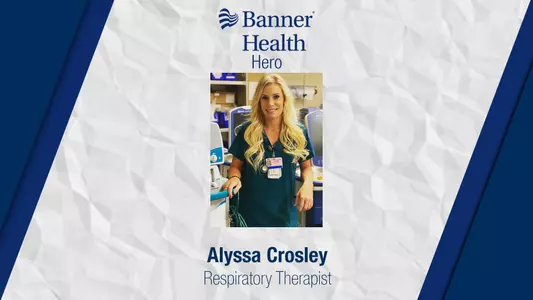
Banner Health Hometown Hero - Alyssa Crosley
10/22/2020 1:57:00 PM | General
This week's Banner Health Hometown Hero is respiratory therapist Alyssa Crosley
As the COVID-19 pandemic impacted the world, the medical field stepped into the light for the amazing work they perform day in and day out. Over the next 10 weeks, UNC Athletics will highlight a Banner Health Hometown Hero for their impact on the community during these unique times.
Alyssa Crosley, Respiratory Therapist
What does your day-to-day look like and how did that change during the pandemic?
Pre COVID, my days were still steady I like to refer to waking into work as "it's like a box of chocolates, you never know what you're gonna get. " Meaning each day is completely different there are never two days that are the same. I can walk into work one day and be in the emergency department and NICU as the Lead of the day and take care of traumas coming in or patients in respiratory failure, cardiac arrests, COPD, etc. Then the next day I can come in and have a general floor assignment giving lots of nebulizer treatments and other airway treatment or I can walk in and have the ICU managing the patients on ventilators. The assignments change daily. It can be a steady day or it can be a day where there's several traumas, code blues, preterm babies being born needing a little extra help to breathe and it can be nonstop.
When COVID hit, it went front 0-100 rapidly. It got to a point where we had to do what we could do with the staff and equipment we had. Running super low on ventilators we had to borrow several from different hospitals in the state. We had converted single patient rooms into double occupancy. Two patients in one room both on ventilators it got a little nerve-racking when we got sort of desperate for help, we had some respiratory therapists & nurses fly out from AZ to help us out as we needed more and more help. The ENTIRE hospital came together and was the best teamwork I've ever experienced. It seems it's happened so flawlessly, no questions asked staff from units that don't really deal with critical care came and stepped up to help it, nurses, from pediatrics units came to help literally every unit in our hospital we received a ton of help and it was really amazing to see us all come together and I think it brought the whole hospital together and I'm really thankful & proud of everyone.
What were the extra steps taken in protecting you as a frontline worker?
When we first started getting COVID patients we all had our N95 masks, surgical masks to go over those, gowns, gloves, and goggles. When things blew up we all learned we were slowing running out of PPE and needed more protection.
Early on my manager of the Respiratory Therapy department, Geriann Gunderson, went out on her own to Harbor Freight and bought several face shields. Then face shields were a big deal and in high demand as that was one of the best things we could use for protection along with everything else. Especially for intubation, where we put the breathing tube into the patient's airway with the Anesthesiologists. Most of us, if we were going to have patients with COVID, would wear clothes or scrubs into hospital change into hospital scrubs while we worked and changed out of them before we left to go home. We did lots of handwashing, washing off our face shields immediately after we get out of a room with a strong disinfectant and double or triple wiping down equipment, sterile processing.
How did you best support these patients during such an isolating time without visitors?
One of the biggest things I did to comfort patients was holding their hands and making sure they knew I was there when they were afraid, especially if it came to the point of needing mechanical ventilation. Something as small as touching their hand or rubbing their head means a lot and shows there is some comfort in the scary times. If it came to end of life and there was no family allowed in, I was always on the run, but wound try to make sure I find time to make sure there was music playing, anything, staying with them as long as I could. But they were never alone. The nurses and doctors also had to have good communication with their families. We would bring our phones in their rooms and facetime their families as much as we could.
How do you feel you are now prepared for if this situation arose again?
I feel a lot more prepared, no one has this completely figured out quite yet but we are trying our best to treat these patients the safest way and learning the best therapies and procedures to treat this. I went to Arizona for six weeks when they were getting hit and got to see it all again and recommended things to the doctors there.
How were you receiving information on how to take care of these patients?
We had a great team of critical care doctors including pulmonologists and internal medicine doctors that worked around the clock. No one gave us a handbook on how to treat COVID. We had to try different techniques and medication, ventilator settings and figure out what was working. Banner Health developed protocols on treating COVID patients as well as ARDS net. Which is a protocol for Acute Respiratory Distress Syndrome.
Working in such a stressful situation, how did you keep yourself fresh and ready to help those in need?
I think it happened so fast and a lot of us were extremely tired at the end of the day but while being in the action it's almost like adrenalin kicked in. We had to be on point, lots of communication with my respiratory team, doctors, nurses, etc. Staying hydrated, eating a good breakfast and going to sleep right when I got home was important. Even on my days off I still feel like I needed to be back at work and I wanted to be. We have a great respiratory therapy team and we all made sure to call each other and offer help to others. Making sure everyone got a little break and all got lunch. Mostly rest, even though when I got home I still heard alarms, IV poles going off my head. I also helped myself with mental pep talks.
Alyssa Crosley, Respiratory Therapist
What does your day-to-day look like and how did that change during the pandemic?
Pre COVID, my days were still steady I like to refer to waking into work as "it's like a box of chocolates, you never know what you're gonna get. " Meaning each day is completely different there are never two days that are the same. I can walk into work one day and be in the emergency department and NICU as the Lead of the day and take care of traumas coming in or patients in respiratory failure, cardiac arrests, COPD, etc. Then the next day I can come in and have a general floor assignment giving lots of nebulizer treatments and other airway treatment or I can walk in and have the ICU managing the patients on ventilators. The assignments change daily. It can be a steady day or it can be a day where there's several traumas, code blues, preterm babies being born needing a little extra help to breathe and it can be nonstop.
When COVID hit, it went front 0-100 rapidly. It got to a point where we had to do what we could do with the staff and equipment we had. Running super low on ventilators we had to borrow several from different hospitals in the state. We had converted single patient rooms into double occupancy. Two patients in one room both on ventilators it got a little nerve-racking when we got sort of desperate for help, we had some respiratory therapists & nurses fly out from AZ to help us out as we needed more and more help. The ENTIRE hospital came together and was the best teamwork I've ever experienced. It seems it's happened so flawlessly, no questions asked staff from units that don't really deal with critical care came and stepped up to help it, nurses, from pediatrics units came to help literally every unit in our hospital we received a ton of help and it was really amazing to see us all come together and I think it brought the whole hospital together and I'm really thankful & proud of everyone.
What were the extra steps taken in protecting you as a frontline worker?
When we first started getting COVID patients we all had our N95 masks, surgical masks to go over those, gowns, gloves, and goggles. When things blew up we all learned we were slowing running out of PPE and needed more protection.
Early on my manager of the Respiratory Therapy department, Geriann Gunderson, went out on her own to Harbor Freight and bought several face shields. Then face shields were a big deal and in high demand as that was one of the best things we could use for protection along with everything else. Especially for intubation, where we put the breathing tube into the patient's airway with the Anesthesiologists. Most of us, if we were going to have patients with COVID, would wear clothes or scrubs into hospital change into hospital scrubs while we worked and changed out of them before we left to go home. We did lots of handwashing, washing off our face shields immediately after we get out of a room with a strong disinfectant and double or triple wiping down equipment, sterile processing.
How did you best support these patients during such an isolating time without visitors?
One of the biggest things I did to comfort patients was holding their hands and making sure they knew I was there when they were afraid, especially if it came to the point of needing mechanical ventilation. Something as small as touching their hand or rubbing their head means a lot and shows there is some comfort in the scary times. If it came to end of life and there was no family allowed in, I was always on the run, but wound try to make sure I find time to make sure there was music playing, anything, staying with them as long as I could. But they were never alone. The nurses and doctors also had to have good communication with their families. We would bring our phones in their rooms and facetime their families as much as we could.
How do you feel you are now prepared for if this situation arose again?
I feel a lot more prepared, no one has this completely figured out quite yet but we are trying our best to treat these patients the safest way and learning the best therapies and procedures to treat this. I went to Arizona for six weeks when they were getting hit and got to see it all again and recommended things to the doctors there.
How were you receiving information on how to take care of these patients?
We had a great team of critical care doctors including pulmonologists and internal medicine doctors that worked around the clock. No one gave us a handbook on how to treat COVID. We had to try different techniques and medication, ventilator settings and figure out what was working. Banner Health developed protocols on treating COVID patients as well as ARDS net. Which is a protocol for Acute Respiratory Distress Syndrome.
Working in such a stressful situation, how did you keep yourself fresh and ready to help those in need?
I think it happened so fast and a lot of us were extremely tired at the end of the day but while being in the action it's almost like adrenalin kicked in. We had to be on point, lots of communication with my respiratory team, doctors, nurses, etc. Staying hydrated, eating a good breakfast and going to sleep right when I got home was important. Even on my days off I still feel like I needed to be back at work and I wanted to be. We have a great respiratory therapy team and we all made sure to call each other and offer help to others. Making sure everyone got a little break and all got lunch. Mostly rest, even though when I got home I still heard alarms, IV poles going off my head. I also helped myself with mental pep talks.



Sunday, September 06
Sunday, September 06
Sunday, August 30
Sunday, August 30